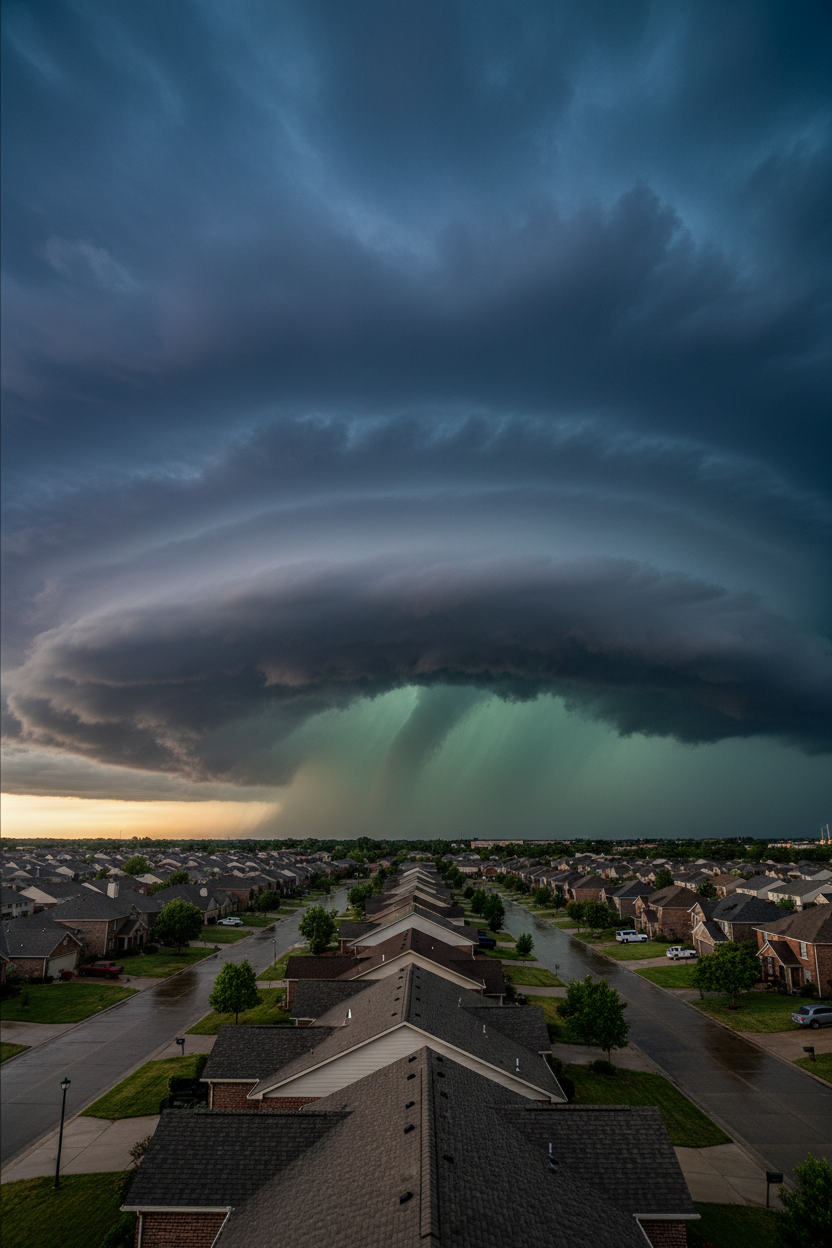
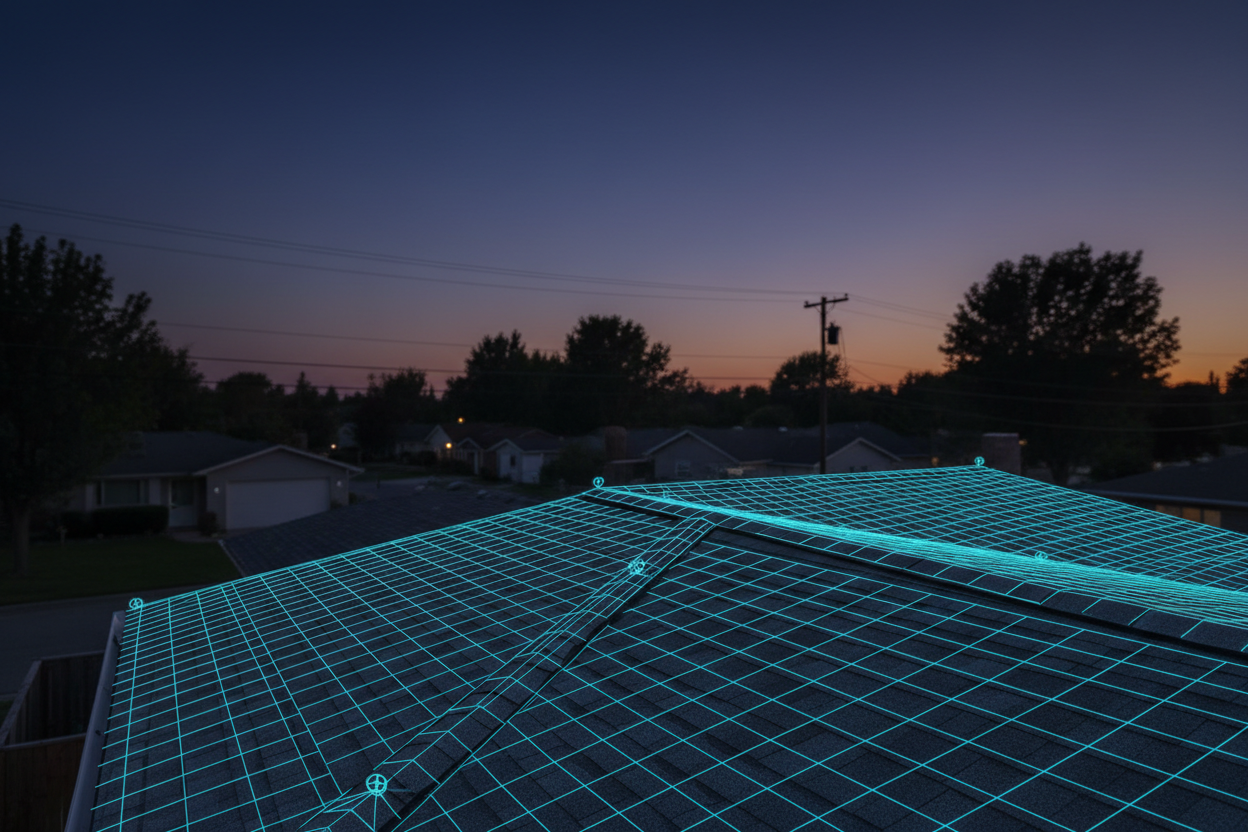
Every storm season from here forward has two kinds of contractors: the ones running AI-assisted pipelines that find, score, and document the work automatically — and the ones still door-knocking behind them. This is the build that moves you into the first group, using AI you own, not AI you rent from a lead broker — the code lands in your own repo, no subscription to cancel. The future is already here, and the method outlasts the tools: even if you never touch half of these again, it's a template for whatever market you decide to dominate next.
Instant download · Two volumes · 18 build modules · Verified endpoints, not screenshots
That gap is the opportunity — and it closes fast. Right now, most crews are still working leads the way they did ten years ago: buying lists that six other contractors already have, knocking doors cold, guessing at territory.
Meanwhile, AI has quietly made it possible for a single operator to run what used to take a five-person office — storm tracking, owner lookups, outreach, documentation, marketing — all at once, all before sunrise.
You don't need to become a developer to use it. You need the build written out in front of you, in order, with nothing left to guess. That's what this is.
Every AI feature in the manual inherits one guardrail prompt, and none of them are pointed at filing, adjusting, or negotiating a claim. That boundary is the design, not a disclaimer. AI runs the machine — it never touches your license.
Instead of an AI that tries to file or negotiate the claim for you, this system builds the evidence — the photos, measurements, and documentation package that make your scope easy for a carrier to approve. It does the labor, and stays entirely on your side of the desk.
AI runs the machine — it never touches your license.
No third-party price sheets, no borrowed data, no fine print you didn't write. The scope comparison workflow inside this system runs entirely on inputs you own, so the result is yours outright — no licensing exposure riding along with it.
This is the same commercial result your competitors are chasing with rented tools — except everything here is yours, compliant, and built to scale with the rest of the system.
18 modules. Real endpoints. Working request bodies. Copy-paste prompts.
The manual documents every step — what to say, what to photograph, what to record, and exactly where an AI assistant saves hours without putting your license or your contract at risk. What it never does is put you in the adjuster's chair.
Pay once. Instant download. No subscription. Every week you wait is a week your competitor spends building this without you.
Instant digital download — see the fine print before you buy. An educational reference guide; no income, profit, or business results are represented anywhere in this product.
Fair — that's exactly why this is written as a build manual, not a lecture on AI theory. Every module is a copy-paste prompt, a working endpoint, a schema you drop in. You don't need to understand the model; you need the sequence. Modules 1, 3 and 6 are the highest-leverage and the simplest, and Appendix C tells you exactly what to build if you build nothing else.
Yes. Every edge becomes standard practice eventually — that's what happened with websites, then Google reviews, then CRMs. The contractors who won weren't the ones who invented those things. They were the ones running them while their competitors were still deciding.
This is your head start. Right now you can be the only roofer in your market with an AI-assisted pipeline. In three storm seasons it'll be table stakes, and you'll already own the system, the data, and the reputation you built with it — while everyone else is starting from zero.
The build manual is jurisdiction-neutral. The legal sections use Texas as the worked example because it has the strictest contractor-adjuster separation in the country — build to Texas and you're conservative most places. Volume I includes a 13-point checklist for every new state.
No. It's an educational reference guide. Every version says so, and Volume I tells you specifically which three sections to put in front of an attorney before you operate.
Build it while it's still an edge. Two volumes, 18 build modules, and the compliance perimeter written down instead of assumed.
This guide is educational material only. It is not legal, insurance, tax, or financial advice, and no attorney-client relationship is created. Laws vary by jurisdiction and change frequently. No representation is made regarding any income, profit, or business results. Consult licensed professionals in your jurisdiction before implementing any part of this system.
The publisher does not own or operate a roofing or restoration company, does not sell leads, software, or services to readers, and receives no compensation from any tool, platform, or vendor named in either volume. Tools are recommended on the merits. Purchase of this guide creates no ongoing business relationship beyond the courtesy calls described below.
This is an instant digital download. Once purchased, the files are yours — all sales are final and no refunds are issued.
Purchase includes two calls of up to one hour each. Reply to your receipt — or write to info@salanskiesholdings.com — to book one and we'll send times that work. Most readers take the first during setup and save the second for after their first storm cycle. Both are redeemable within 90 days of purchase.
What they cover: implementing the material — endpoints, schemas, tooling, build sequencing. What they are not: legal, insurance, tax, or financial advice, or claim consulting. They do not include review of, or opinion on, any specific loss, property, policy, or estimate. Questions outside that scope will be declined and referred to a licensed professional in your jurisdiction. No outcome of any kind is promised.
All third-party product, platform, and company names referenced in this guide are the property of their respective owners. Reference is for identification and educational purposes only and does not imply affiliation or endorsement. No proprietary third-party price data is reproduced in either volume.